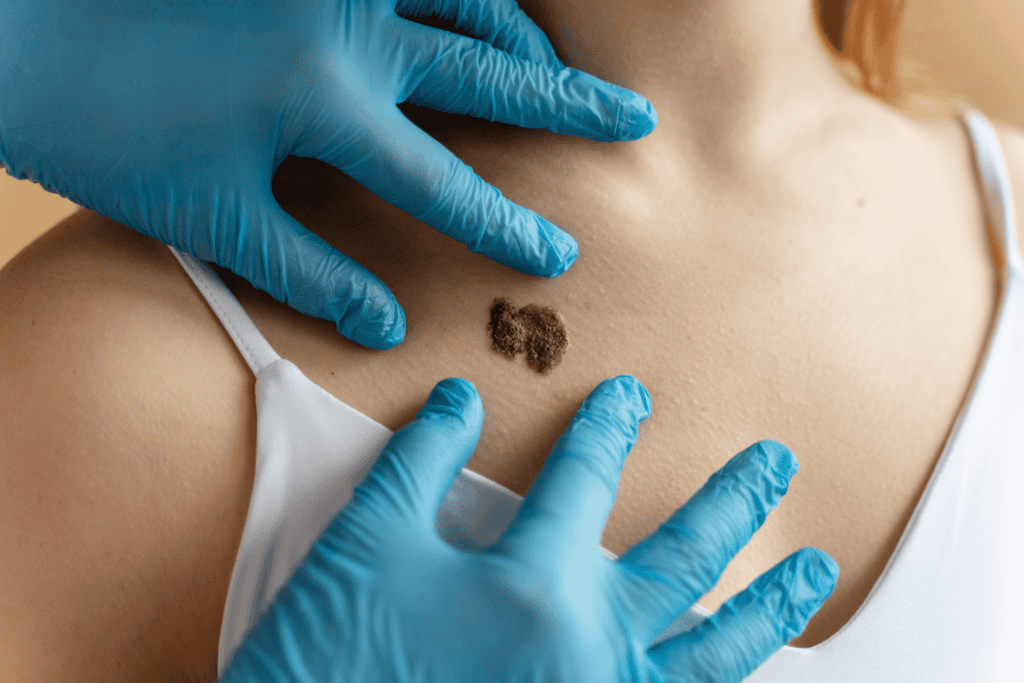
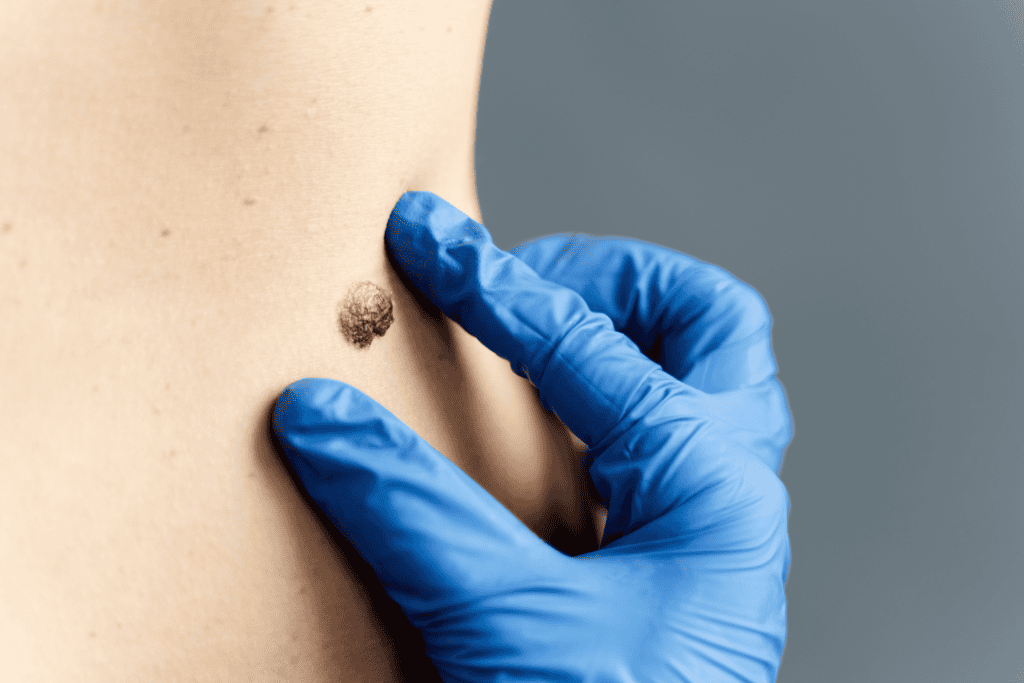
A mole (also called a nevus) is a common skin growth caused by clusters of pigment-producing cells. Moles can be present at birth or develop over time—especially due to sun exposure, hormonal changes, or genetics.
Most moles are harmless, but some may evolve into or signal melanoma, the most dangerous form of skin cancer. That’s why routine skin checks and professional mole monitoring are essential for long-term skin health.
Use the ABCDE Rule to identify moles that should be evaluated by a dermatologist:
- A – Asymmetry: One half doesn’t match the other
- B – Border: Irregular or poorly defined edges
- C – Color: Uneven color or multiple shades
- D – Diameter: Larger than 6mm (about the size of a pencil eraser)
- E – Evolving: Changes in size, shape, color, or behavior (itching, bleeding)
Other signs include:
- The appearance of new moles after age 30
- More than 50 moles on the body
- Moles that become itchy, painful, or start to bleed
If you notice any of these signs, schedule an evaluation right away.
It’s natural to worry when you notice changes in your skin—but the best way to protect yourself is to stay informed and proactive.
Our Diagnostic Approach Includes:
- Skin exam by a board-certified dermatologist
- Dermoscopic analysis (magnified view of mole structure)
- Biopsy (if needed) for lab testing to rule out cancer
Biopsies are performed quickly and painlessly in-office using local anesthesia.
We offer several techniques for safe, comfortable mole removal:
- Shave Excision – For surface-level moles, removed with a scalpel
- Full-Thickness Excision – Used for deeper or potentially cancerous lesions
- Stitch Closure or Natural Healing – Depending on the type and size of the mole
All procedures are performed under local anesthesia, with minimal discomfort and little to no downtime.
For confirmed non-melanoma skin cancers (like BCC or SCC), our double board-certified dermatologist, Dr. Bobby Awadalla, may recommend Mohs Surgery. This advanced technique:
- Offers up to 99% cure rates
- Preserves healthy surrounding tissue
- Reduces scarring and recovery time
- Is ideal for high-risk or cosmetically sensitive areas
Mohs is not typically used for benign moles, but may be advised if skin cancer is diagnosed.
If you’re concerned about a mole—or just want a smooth, refreshed appearance—our team is here to help. At DermLounge, we combine medical precision with aesthetic sensitivity to deliver the best results possible.
📞 Call (714)798-2900 or schedule your mole evaluation online to meet with one of our dermatology specialists in Anaheim.